Biography of Henry Edward Partridge 1848 - 1931
Stephanie McKenzie, Marylyn Mayo Intern 2009, Auckland Art Gallery Toi o Tāmaki
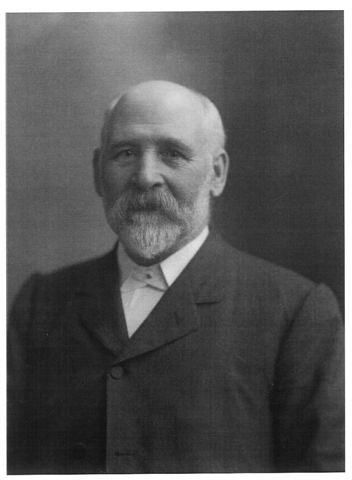
Ko Henry Edward Partridge (Āhua 1) tētahi o ngā kaihoko tuatahi o ngā mahi a Gottfried Lindauer, ā, ka huri ngā tau, koia anō tāna kaihoko matua, e tata ana ki te 40 tau rāua e mahi tahi ana. E mōhiotia ana a Partridge mō tāna kohinga whakaahua nā Lindauer, e 70 te nui, e kīia ana ko te Partridge Collection, kei Toi o Tāmaki e pupuritia ana i tēnei rā.
Ka whānau mai a Partridge i te 17 o Hune i te tau 1848 ki Somers Town i Rānana. Ko Mary-Ann rāua ko Charles Partridge ōna mātua. He kaimahi te pāpā nō te poutāpeta o te rohe rā.1 He mārire tōna noho i tōna tamarikitanga, ā, ahakoa he iti noa ōna rā i te kura, e ngākaunui ana ia ki te pukapuka.2 Ka 10 tau tōna pakeke, ka tīmata a Partridge ki te mahi – kia 10 ngā hāora i te rā, e ono ngā rā o te wiki. I te tau 1861, ka 13 tau tōna pakeke ka whakarere ia i tana tūranga mahi ka kuhu atu ki Te Ope Kātua o Piritana, ā, ka whara ia i te mahi, ka mutu tana mahi ki te ope kātua. Heoi, ka mahi tonu a Partridge hei hēramana ki ngā kaipuke hokohoko, ā, ka tūpono haere ia ki ngā ope hōia o Te Riri Tara-ā-Whare o Amerika mā runga i tētahi waka e kawe ana i te pū. Mai i te marama o Hānuere i te tau 1865, ka tīmata a Partridge ki te whai i te ara hokohoko tī ki waenga i Rānana me Haina. Ka whakawhiwhia te kaipuke tuatahi e kawe ana i te tī hou o te tau ki Rānana ki te paraihe, ā, e pārekareka ana ki a Partridge te whakapuaki i āna kōrero mō ngā whakataetae whakamīharo a ngā kaipuke e tere atu ana ki ngā tauranga waka o East India ki Rānana.
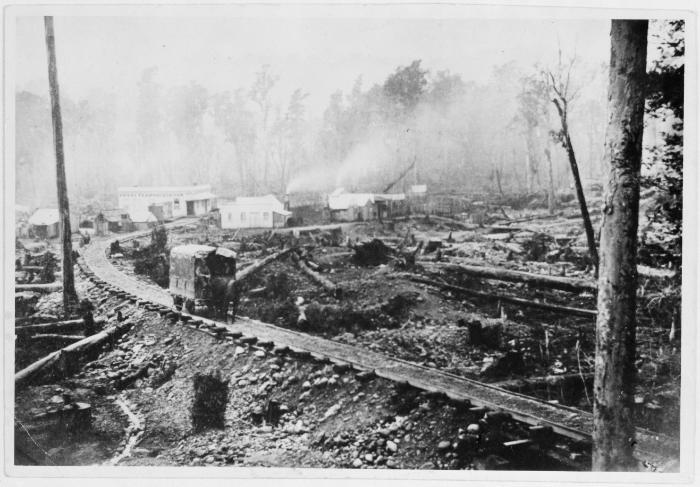
I tētahi o ngā haerenga i te marama o Hune i te tau 1866, ka pae te kaipuke o Partridge ki Haina, ka mau ia ki reira. Nā, ka rongo ia mō te nui o te kōura ki Ahitereiria, ka tere atu ki Poihākena. Kāore i roa ki reira, ka whai anō a Partridge i te ara kōura ki Aotearoa, tae atu ki ngā papa kōura ki Kawatiri me Ōtākou. Ka tau atu ia ki Hokitika i te tīmatanga o te tau 1867, ka whāia ia e tana teina me tana tuahine a Jessie Adelaide rāua ko Arthur ki Aotearoa.3 He iti noa āna moni me āna taputapu, ka toro haere a Partridge i Te Waipounamu mā raro e rapu ana i te kōura i te hōtoke o tōna tau tuatahi ki Aotearoa (Āhua 2). Ka raruraru tāna whai kōura i te kino o te huarere, ā, ka kaha ngaua hoki tōna tinana e te mātao. Ka piki ake a Partridge ki te raki, ā, ka tae atu ki Tāmaki Makaurau i te marama o Nōema i te tau 1868, ka tūtaki ki tōna hoa wahine, ki a Miriam Anotinette Odlum. I whānau mai te wahine nei ki Aotearoa. Ka mārena rāua ki Tāmaki Makaurau i te 2 o Ākuhata i te tau 1870, ā, tokoiwa ā rāua tamariki. He kōhungahunga tonu ka mate wawe tētahi tokorua o rātou .4
Henry Edward Partridge (Fig 1) was one of Gottfried Lindauer’s earliest clients and grew to be his most dedicated patron, their professional relationship lasting almost 40 years. Partridge is now best remembered for having amassed a collection of over 70 paintings by Lindauer, later known as the Partridge Collection and today held at Auckland Art Gallery Toi o Tāmaki.
Partridge was born on 17 June 1848 in Somers Town, London, to Mary-Ann and Charles Partridge, an employee of the district post office.1 He had a peaceful childhood and developed a love of literature despite minimal schooling.2 At 10 years of age, Partridge began working, putting in a 10-hour day, six days per week. In 1861, at the age of 13, he escaped this working life to join the British Navy, though his naval career soon ended when he was injured in service. Partridge continued his career at sea by crewing merchant ships and once even inadvertently sailed on a vessel carrying arms to the Confederate Forces in the American Civil War. From January 1865, Partridge began working the tea-trading route between London and China. There was a prize for the first ship to arrive in London with the new season’s tea and Partridge later revelled in telling his family exciting stories of ships racing to London’s East India Docks.
During one voyage in June 1866, Partridge’s ship was wrecked and he was stranded in China. From there, he sailed to Sydney after being attracted by news of the goldrush in Australia. Partridge did not stay there long, after setting his sights on Aotearoa New Zealand’s goldfields in Kawatiri Buller and Ōtākou Otago. He arrived in Hokitika in early 1867, and two of his siblings, Jessie Adelaide and Arthur, later joined him in New Zealand.3 With little money and few possessions, Partridge travelled Te Waipounamu the South Island on foot in search of gold during the winter of that first year (Fig 2). He was foiled by extreme weather, which stopped him prospecting, and also developed serious frostbite. Partridge travelled north from there and by November 1868 had reached Tāmaki Makaurau Auckland, where he met his New Zealand-born wife, Miriam Antoinette Odlum. They married in Auckland on 2 August 1870, and went on to have nine children, two of whom did not survive infancy.4
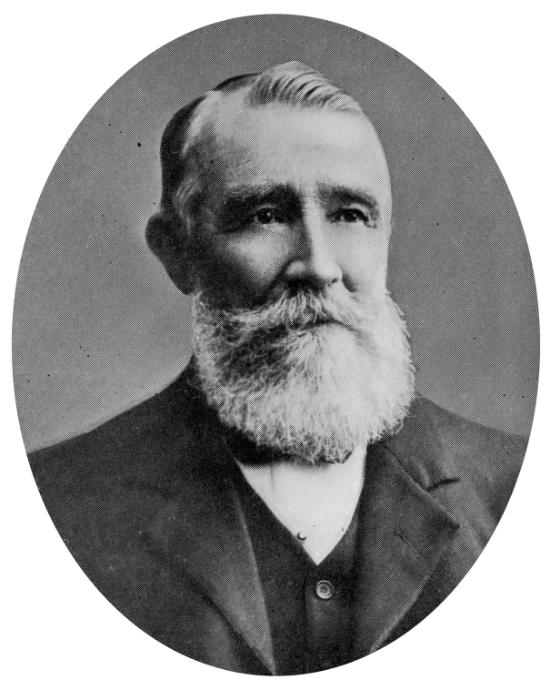
Ka hūnuku a Partridge ki te rohe o Waikato i runga anō i te ara kōura, ā, ka whakahaerehia e ia tētahi wheketere paopao kōhatu ki Moanatairi ki Kauaeranga. Ka whakatūria tētahi kāinga mā rāua ko Miriam, ka hūnuku hoki a Miriam, 17 ōna tau. I konei, ka tūtaki atu a Partridge ki a James Mackay (Āhua 3), he kaimahi matua nā te kāwanatanga e mahi ana ki te rohe o Waikato. Ka huri haere rāua ko Mackay ki ngā papakāinga Māori, nā whai anō ka whanake mai tōna ngākaunui ki te ao o te Māori me tōna hiahia ki te kohikohi taonga, ā, ka hua mai te Partridge Collection. Ā, ka whai wāhi a Mackay ki te Kohikohinga, otirā, kei te Partridge Correspondence ngā whakamārama. Nō te tau 1873 rā anō, ka tau atu a Partridge rātou ko tōna whānau ki Tāmaki Makaurau, ka whakatūria e ia tōna toa rongonui, arā, ko H E Partridge & Co. He whare hoko tūpeka me ngā rawa hākinakina.
Ko te whakapae, ka tūtaki a Gottfried Lindauer rāua ko Partridge ki Tāmaki Makaurau i te mutunga o te tau 1875, i te tīmatanga rānei o te tau 1876.5 Ka whakahoahoa rāua, arā, ko te kaihoko me te ringatoi, nā, i te tau 1884, ka tapaina e Partridge tētahi o āna tamāhine ki te ingoa o Myra Lindauer.6 Nā, ka hoatu e te ringatoi te ingoa Partridge hei ingoa waenga mō tāna tama tuatahi, mō Hector.
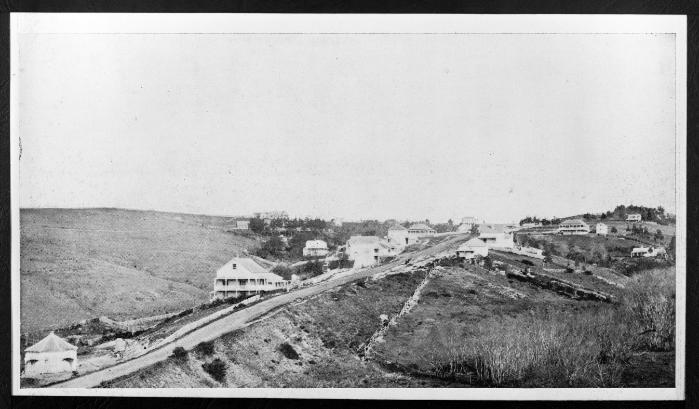
Kāore i te āta mōhiotia te wāhi i nōhia tuatahitia e Partridge ki Tāmaki Makaurau, heoi, nō te tau 1888, kei 50 Grafton Rd te whānau e noho ana, e tiro atu ana te whare ki te Auckland Domain.7 Ko ‘Aropiri’ te ingoa o te whare, ā, i reira a Partridge e noho ana tae atu ki tōna matenga (Āhua 4). I konei āna taonga huhua e mau ana, ā, ka whakaatuhia tuatahitia tana kohinga whakaahua kiritangata ki roto tonu i te whare ki te taha o ngā tini taonga nō iwi kē.
Again in search of gold, Partridge moved to the Waikato district and began running a small crushing plant in Moanataiari Creek, Thames. It was here that he brought 17-year-old Miriam to the home he had built. Partridge’s acquaintance with James Mackay (Fig 3), the influential government agent in the Waikato, began here. He accompanied Mackay to Māori settlements, developing an admiration for Māori culture and the motive to develop what would become the Partridge Collection. Mackay later contributed to the Collection, as discussed in the Partridge Correspondence. In 1873, Partridge and his family at last settled in Auckland, where he established his successful shop and business, H E Partridge & Co, selling tobacco with a secondary trade in sporting goods.
The first meeting between Gottfried Lindauer and Partridge probably took place in Auckland in late 1875 or early 1876.5 The affection between patron and artist grew and in 1884 Partridge named a daughter Myra Lindauer.6 The artist in turn gave Partridge as a middle name to his first son Hector.
It is unknown where Partridge first settled in Auckland but by 1888 the family were living in a home at 50 Grafton Road, which overlooked the Auckland Domain.7 The house was known as ‘Aropiri’ and Partridge lived in it until his death (Fig 4). He exhibited his love of collecting here and initially displayed the portrait collection at the house, along with objects from other cultures.
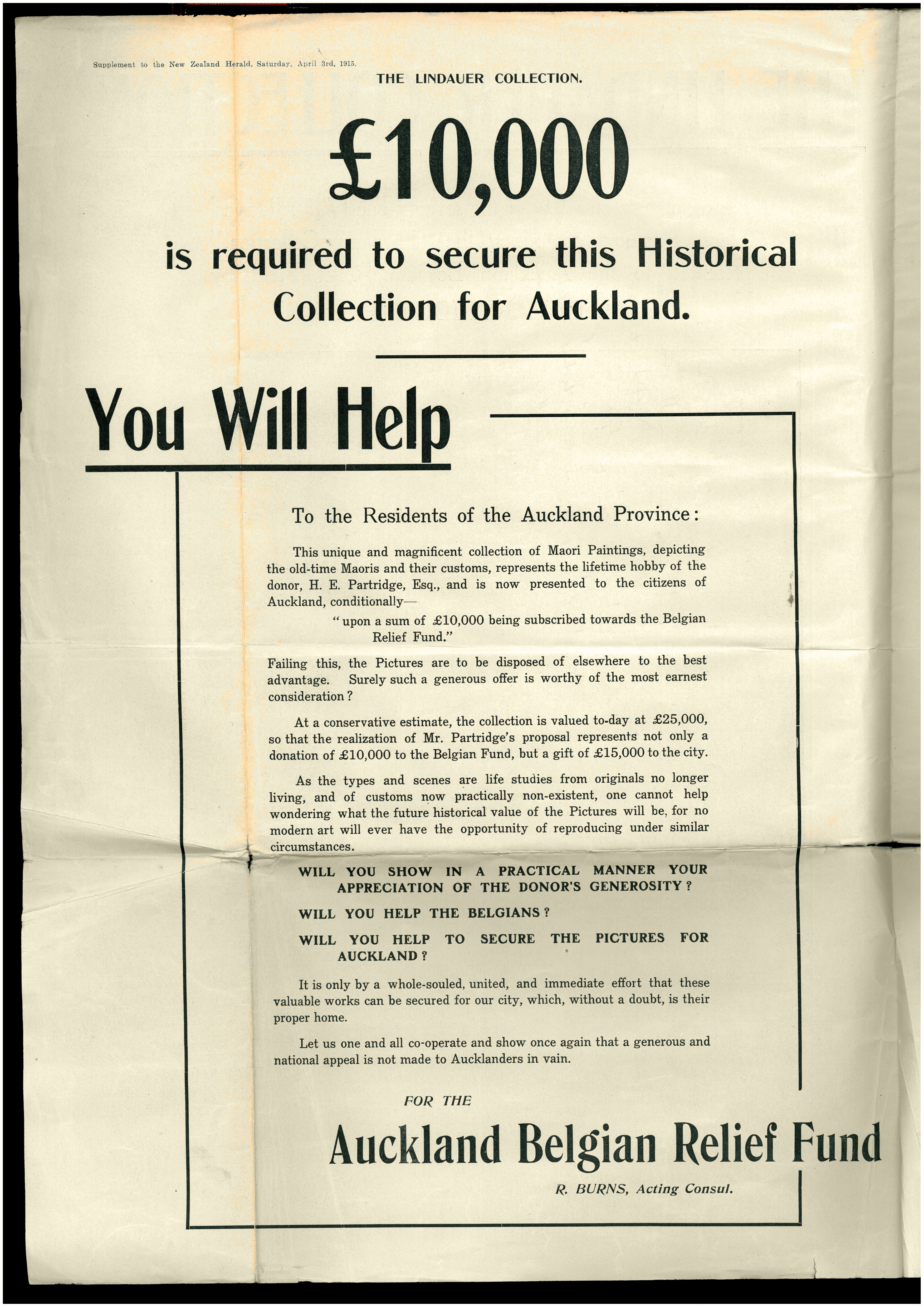
Fig 5 Call to the citizens of Auckland to donate to the Belgian Relief Fund, New Zealand Herald supplement, 3rd April 1915
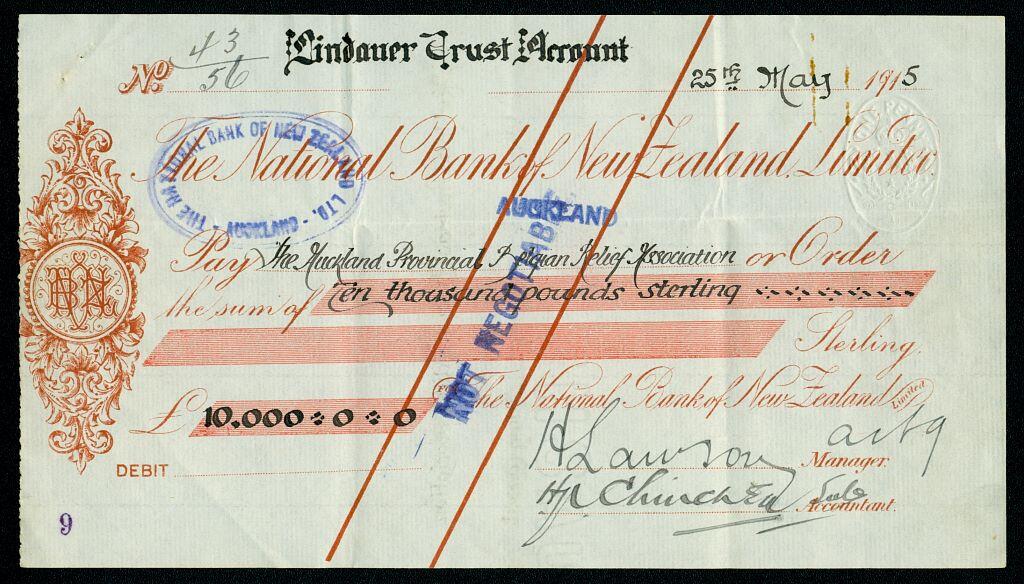
Fig 6 Copy of the cheque donating ten thousand pounds to the Belgian Relief Fund. E H McCormick Research Library, Auckland Art Gallery Toi o Tāmaki, gift of Valerie Hill, RC2009/5
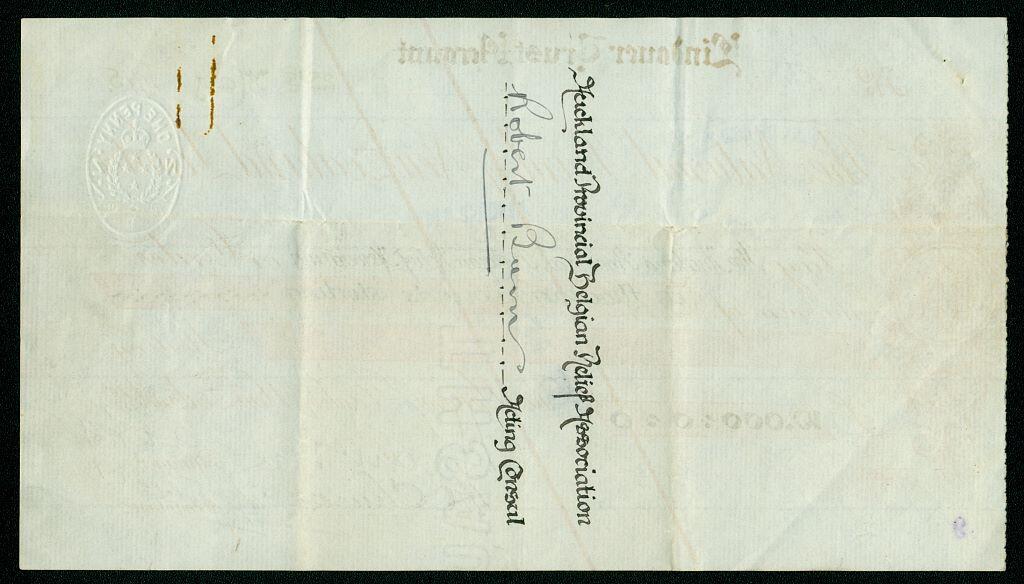
Fig 7 V Back of the cheque donating ten thousand pounds to the Belgian Relief Fund. E H McCormick Research Library, Auckland Art Gallery Toi o Tāmaki, gift of Valerie Hill, RC2009/5
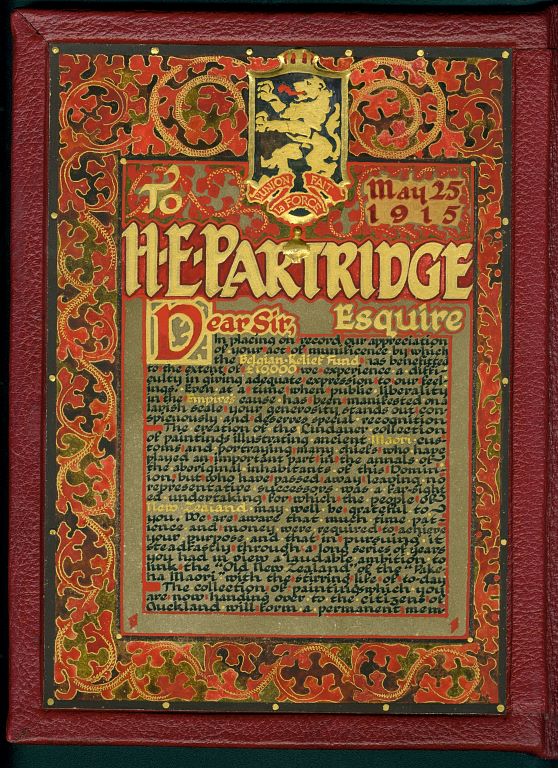
Fig 8 Left side of illuminated address presented to Henry Partridge in acknowledgment of his donation. E H McCormick Research Library, Auckland Art Gallery Toi o Tāmaki, gift of Valerie Hill, RC2009/5
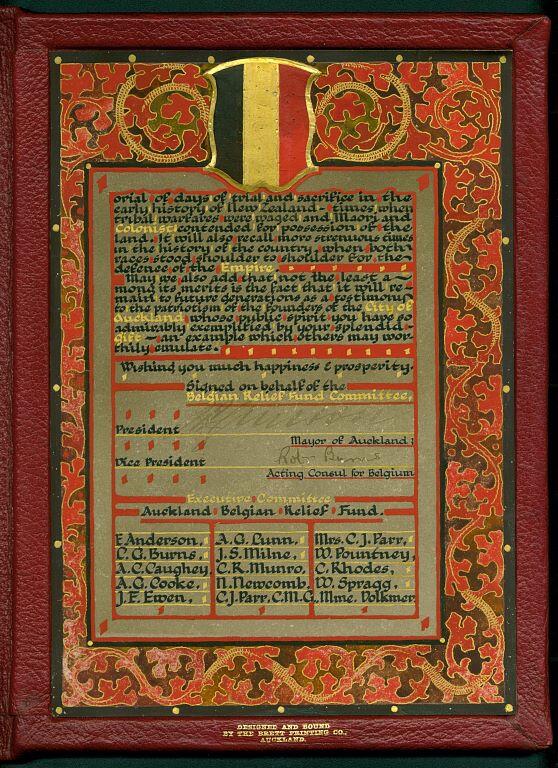
Fig 9 Right side of illuminated address presented to Henry Partridge in acknowledgment of his donation. E H McCormick Research Library, Auckland Art Gallery Toi o Tāmaki, gift of Valerie Hill, RC2009/5
Ko tētahi o ngā āhuatanga nui o Partridge ko tōna aroha nui ki te tangata, ā, nō muri tata atu i te hūnga o Tarawera i te tau 1886, ka toro atu ia ki te āwhina hei kaitūao. Ko tētahi o āna mahi atawhai rongonui, ko tāna takoha atu i te kohikohinga o Partridge ki te Tāone o Tāmaki Makaurau i te tau 1915, ko tāna tono kia kohikohia e ngā tāngata o Ākarana te 10,000 hei hoatu ki te Auckland Belgium Relief Fund (Āhua 5–7). He kaupapa nui tēnei ki a Partridge i te mea i Ūropi ia i te pakarutanga mai o Te Pakanga Nui, ā, ka tautoko ia i te kaha o Belgium ki te ārai atu i ngā ope taua o Tiamani.(Āhua 8–9)
A marked characteristic of Partridge’s personality was his compassion for others, witnessed by his volunteering during the aftermath of the eruption of Mt Tarawera in 1886. Partridge’s greatest known act of beneficence was his donation of the Partridge Collection to the City of Auckland in 1915, on provision that its citizens raise £10,000 for the Auckland Belgium Relief Fund (Figs 5–7). Partridge supported this cause as he had been in Europe at the outbreak of World War One and greatly admired the Belgian stand against the German forces (Figs 8–9).
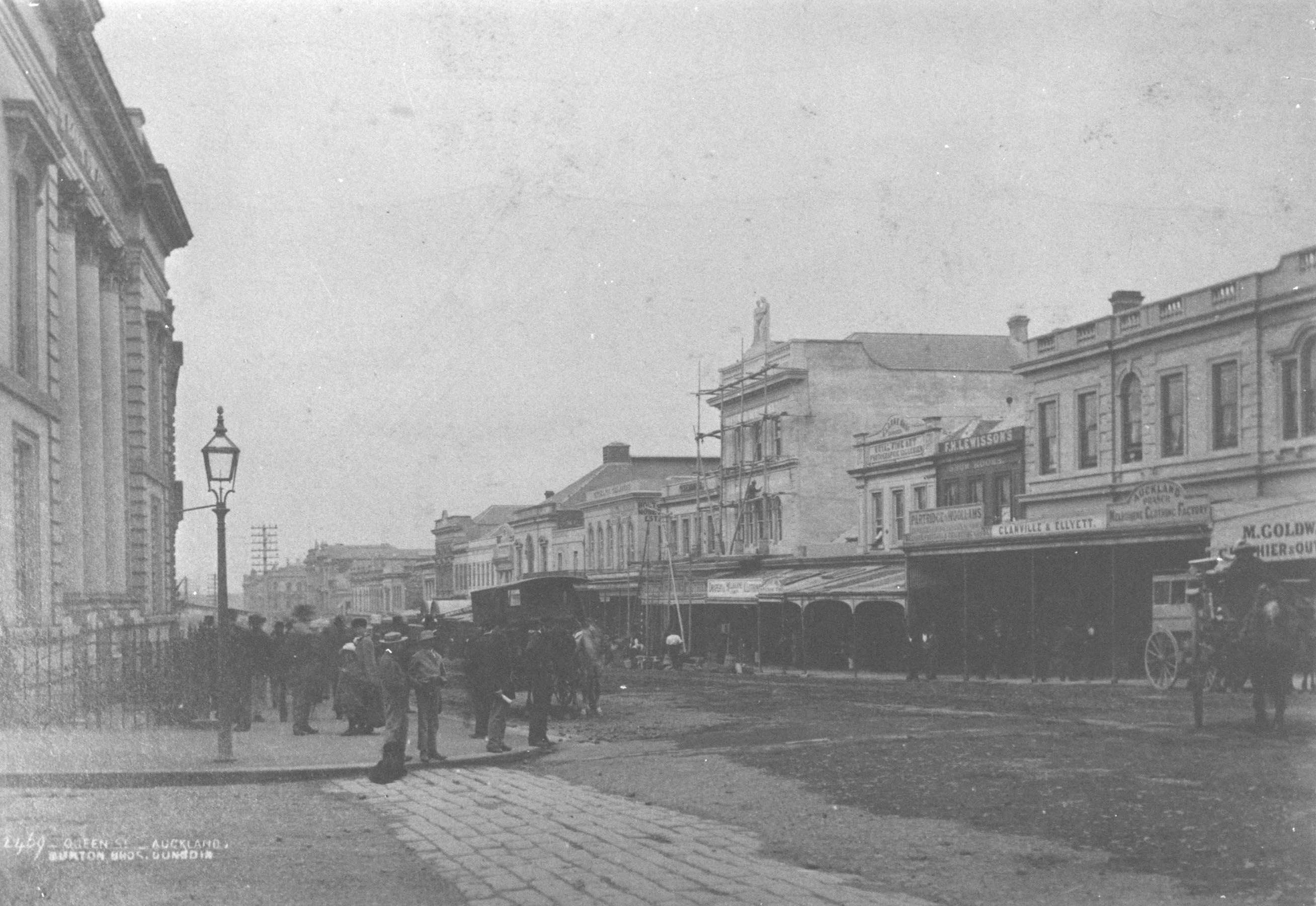
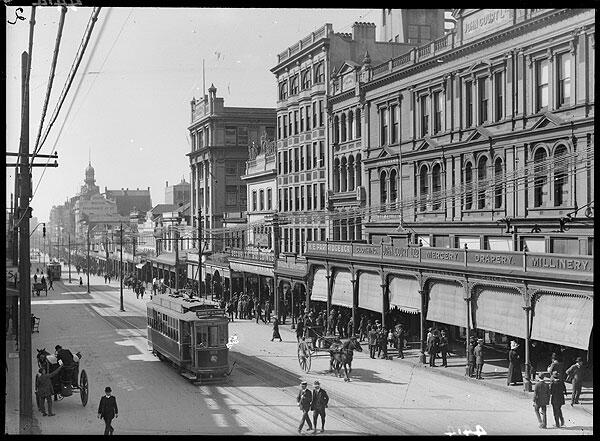
Ka piki ake te pakihi o H E Partridge & Co i te pikinga ake o te mahi kaitūpeka ki Aotearoa, arā, ka whakareatia te tatau o te mahi kaitūpeka e te rua i waenga i te tau 1888 me te tau 1889.8 Ā, i taua wā, he rongonui te toa o Partridge & Co ki 204 Queen Street (Āhua 10), ā, e ai ki a rātou anō, koia te pakihi tūpeka nunui rawa ki Aotearoa.9 Ka taka te wā, ka tū hoki he whare pupuri rawa me tētahi whare taurewa, ā, nō te whakatupunga ake o te kamupene, rite tonu tana haere ki rāwāhi. Ka whai rawa a Partridge i tēnei pakihi, heoi, ka noho tūmataiti tonu, ahakoa te rongonui o tana pakihi.10
Ka mutu ana Te Pakanga Nui, i kite a Partridge i ngā huringa o te ao pakihi, ā, ka tahuri ia ki te whakatā i te tau 1920, e 72 ōna tau. I ōna rā whakatā, ka whakatū ia i tētahi whare hararei ki tātahi ki Glendowie i Tāmaki Makaurau. Koia tōna kāinga i ngā marama o te raumati. Ka mate ana tōna hoa wahine, a Miriam i te marama o Mei i te tau 1931, ā, nō muri tata atu, ka mate atu a Partridge ki tōna kāinga, ki Grafton i te 12 o te marama o Hepetema i taua tau tonu. Ka tanumia ki te urupā o Pūrewa ki Meadowbank. Hei tā ngā maharatanga o āna tamariki tokoono i mahue mai, he tangata arohanui ki te tangata, he pukumahi tō rātou pāpā, he tangata whakaaro nui hoki ki te iwi whānui.
H E Partridge & Co grew as tobacco consumption in New Zealand doubled between 1888 and 1898.8 By this time, Partridge & Co had a popular shop at 204 Queen Street (Fig 10–11) and boasted of being New Zealand’s largest tobacco company.9 His business later incorporated warehousing and bonding, and as it stabilised and grew, he travelled overseas often. This business brought Partridge wealth and the security he desired, but he lived a private life, despite being well known because of his business.10
After World War One, Partridge found the principles of the business world changed and he retired in 1920 at the age of 72. In retirement, he built a family beach house in Glendowie, Auckland, where he stayed during the summer months. His wife Miriam died in May 1931, followed shortly by Partridge’s own death at his Grafton home on 12 September in the same year. He was buried in Purewa Cemetery in Meadowbank. Partridge was survived by six children, who warmly remembered him as a loving, hard-working and civic-minded man.
Personal interview with Bruce W Graham, 11 March 2009.
Personal interview with Bruce W Graham, 11 March 2009.
Personal interview with Bruce W Graham, 11 March 2009.
Personal interview with Bruce W Graham, 11 March 2009.
Sources differ over the timing of when Partridge and Lindauer met.
Myra Lindauer Partridge is the subject of Lindauer’s Portrait of a Little Girl referred to in Una Platts, Colonial Auckland: A Collection of Paintings, Drawings, and Prints by Early Artists, Auckland City Art Gallery, Auckland, 1959, p 51. The painting entered Te Papa’s collection in 2013, https://collections.tepapa.govt.nz/object/1413798
Personal interview with Bruce W Graham, 11 March 2009.
‘The Tobacco Trade’, Auckland Industrial and Mining Exhibition: Official Handbook and Catalogue, Geddis and Blomfield, Auckland, 1898, p 161.
‘The Tobacco Trade’, Auckland Industrial and Mining Exhibition: Official Handbook and Catalogue, Geddis and Blomfield, Auckland, 1898, p 161.
Observer, xxvii, no 13, 15 December 1906, p 25.